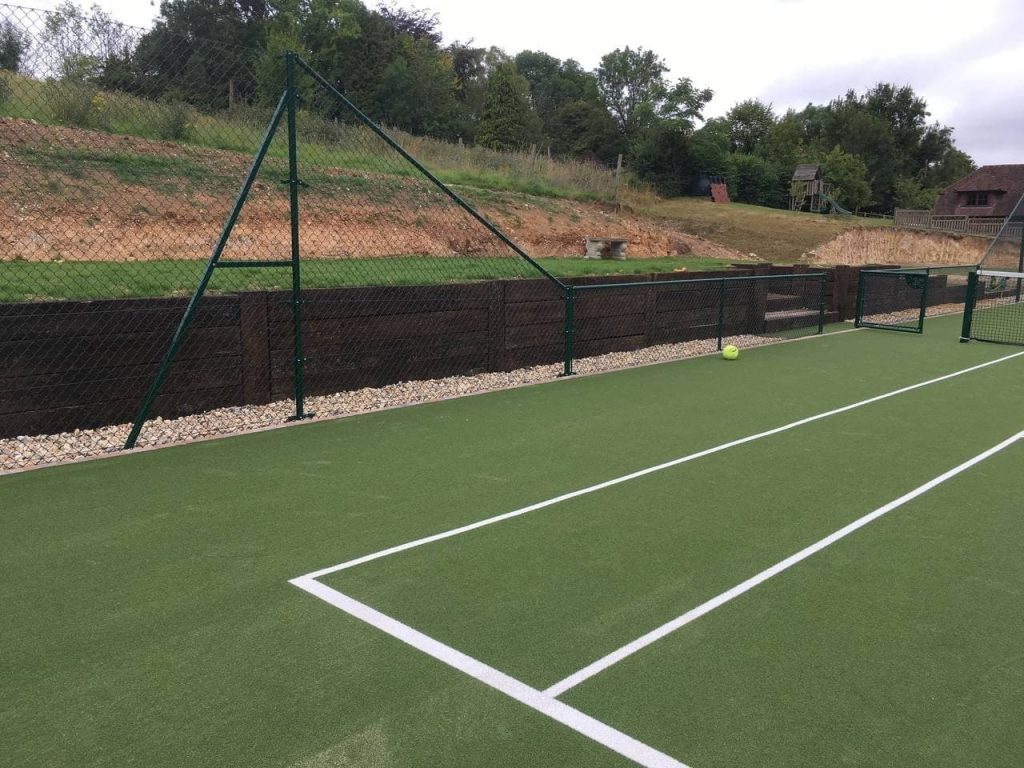
A tennis court may appear relatively straightforward once completed: a level playing surface, clearly marked lines, fencing and a net. However, beneath the visible surface is a carefully constructed system of groundwork, foundations, drainage and surfacing layers that all need to perform together.
When these elements are poorly designed or installed, problems may not always appear immediately. The court can initially look satisfactory before cracking, standing water, uneven areas or surface deterioration begin to develop.
For property owners, schools, clubs and other facilities in Sussex, UK, understanding what can go wrong highlights why professional tennis court construction is so important. Tennis Court Construction Sussex focuses on creating courts from the ground up, with attention given to preparation, drainage, levels and the long-term performance of the playing surface.
Why Does Tennis Court Construction Require Specialist Knowledge?
A tennis court needs to provide more than an attractive surface. It must create a consistent playing environment across a relatively large area while remaining capable of dealing with regular use and changing weather conditions.
Several stages contribute to this.
A Properly Constructed Tennis Court Requires:
- Suitable site preparation
- Stable underlying ground
- Correctly constructed foundation layers
- Accurate levels and falls
- Effective drainage
- A consistent playing surface
- Correct court dimensions and markings
- Appropriate surrounding infrastructure
Weakness at any one of these stages can affect the finished court.
1. Poor Ground Preparation Can Cause Long-Term Movement
Some of the most important tennis court construction work takes place before the playing surface is installed.
The existing ground needs to be assessed and prepared so that the completed court has stable support beneath it.
If unsuitable or poorly compacted ground is simply covered over, settlement can occur later.
Ground Movement Can Lead To:
- Depressions in the court
- Uneven sections
- Cracking
- Surface distortion
- Poor drainage
- Inconsistent playing conditions
Repairing the visible surface without correcting unstable construction underneath may result in the same problems returning.
2. Inadequate Foundations Can Affect the Entire Court
A tennis court covers a substantial area, which means the supporting construction needs to remain consistent throughout.
If one section has stronger support than another, the court may settle unevenly.
This can eventually create differences in surface level that affect both appearance and play.
A professionally prepared foundation distributes loads and provides the stable platform required for the finished surface.
3. Poor Compaction Can Cause Settlement
Supporting materials need to be installed correctly rather than simply spread across the site.
Compaction is an important part of creating a stable foundation.
Where material remains loose, it can settle after construction. Because settlement may not happen evenly, individual areas can begin dropping relative to the surrounding court.
The result can be low spots, surface movement or cracking that becomes progressively more noticeable.
4. Incorrect Levels Can Affect Play
A tennis court needs carefully controlled levels.
The surface must feel consistent underfoot and allow the ball to behave predictably across the playing area.
Poorly established levels can create noticeable irregularities.
Players May Experience:
- Unexpected changes in ball bounce
- Awkward footing
- Uneven transitions
- Areas that feel noticeably different
- Water collecting in low sections
Precision during construction is therefore essential for both usability and surface performance.
5. Poor Drainage Can Leave Water Standing on the Court
Drainage is one of the most important considerations when constructing an outdoor tennis court in Sussex.
Rainwater needs an effective way to move away from the playing area.
If levels, falls or drainage arrangements are unsuitable, water can remain on the surface after rainfall.
Standing Water Can Create Several Problems
It can:
- Reduce court availability after wet weather
- Highlight depressions within the surface
- Encourage localised surface deterioration
- Leave debris concentrated in low areas
- Make the court less pleasant to use
Drainage should therefore be considered during the design and groundwork stages rather than treated as an afterthought.
6. Low Spots Can Become Increasingly Noticeable
A poorly constructed court may develop depressions where sections of the foundation have settled.
These low spots can be particularly obvious after rain because water collects within them.
Even when dry, they can affect how the ball responds during play.
Simply treating the surface of a depression may not provide a lasting solution if settlement beneath the court is still occurring.
7. Cracking Can Indicate Movement Beneath the Surface
Cracks are among the most visible signs that a tennis court has developed a problem.
A crack may begin as a relatively small defect before gradually extending across a larger area.
Possible Causes Can Include:
- Ground settlement
- Movement within supporting layers
- Weak foundation areas
- Age-related surface deterioration
- Problems with the original construction
The pattern and extent of cracking should be assessed before deciding how it should be repaired.
Filling a crack without understanding its cause may simply hide the symptom temporarily.
8. An Inconsistent Surface Can Affect Ball Performance
Consistency is particularly important on a sports surface.
Players expect similar ball behaviour across different parts of the court. If the surface has been installed unevenly or has deteriorated because of poor construction beneath it, ball response can become less predictable.
This can make the court frustrating to use, particularly where one area performs noticeably differently from another.
Professional installation aims to create consistency across the complete playing area rather than concentrating solely on appearance.
9. Surface Deterioration Can Develop Prematurely
A well-constructed playing surface depends on stable support beneath it.
If the foundation moves, the surface may be forced to accommodate stresses it was not designed to handle.
This can contribute to premature deterioration.
Visible problems may therefore originate much deeper within the construction.
When assessing a deteriorating tennis court, it is important to consider whether the surface itself has failed or whether problems underneath are influencing it.
10. Poor Water Management Can Affect Court Edges
Drainage problems are not always confined to the centre of the court.
Water also needs to be managed appropriately around the perimeter.
If surrounding ground directs excessive water towards the court or water cannot escape effectively from its edges, certain areas may remain wetter than intended.
Proper tennis court construction therefore considers the playing surface within the context of the complete site.
11. Incorrect Court Layout Can Affect Usability
Accurate setting out is another important part of construction.
Court dimensions, playing areas, line positions and net locations need to work together correctly.
Errors during the initial setting-out stage can affect the finished playing experience even when the surface itself has been constructed reasonably well.
Careful measurement should therefore begin before the main construction work progresses.
12. Poor Line Marking Can Reduce the Quality of the Finished Court
Court markings need to be clear, accurately positioned and appropriate for the playing surface.
Poorly applied lines can make an otherwise good court look unfinished.
More importantly, incorrect positioning can interfere with proper play.
Professional court construction treats markings as part of the complete installation rather than simply a decorative finishing touch.
13. Weak Perimeter Areas Can Create Maintenance Problems
The space around a tennis court is also important.
Edges need to integrate correctly with surrounding areas, while fencing and access points should be planned so that they work practically with the playing surface.
Poorly considered perimeter details can lead to awkward access, localised deterioration or maintenance difficulties.
The entire facility should therefore be planned as one installation.
14. Poor Fencing Installation Can Affect Court Use
Where fencing forms part of the tennis court installation, it should be positioned and constructed appropriately for the site.
The fencing helps define the playing area and contain tennis balls during use.
Poor alignment, unsuitable positioning or unstable installation can detract from an otherwise well-constructed court.
Planning the fencing alongside the court rather than adding it as an afterthought usually produces a more integrated result.
15. Problems Can Be Difficult to Correct Once the Court Is Finished
One reason proper initial construction matters so much is that many important elements become hidden beneath the completed playing surface.
Once the court has been surfaced, correcting deficiencies within the foundation can require more substantial work than addressing them during construction.
This is why shortcuts during excavation, preparation or compaction can create disproportionate problems later.
Why Surface Repairs Do Not Always Solve Construction Problems
When an existing tennis court develops cracks or depressions, repairing the visible defect can seem like the obvious solution.
However, the first question should be why the defect developed.
If a crack has resulted from movement underneath the surface, treating only the crack leaves the underlying movement unresolved.
Likewise, resurfacing a court with unstable foundations may improve its appearance without addressing the reason deterioration occurred.
A Proper Assessment Should Consider:
- The condition of the playing surface.
- The pattern of cracking or deterioration.
- Existing levels.
- Areas where water collects.
- Evidence of settlement.
- Perimeter conditions.
- The overall structural condition of the court.
This provides a much clearer basis for deciding whether refurbishment or more extensive corrective work is appropriate.
Can Poorly Constructed Tennis Courts Be Refurbished?
Some can.
The suitability of refurbishment depends on what has gone wrong and how extensive the underlying problem is.
If the foundation remains generally stable and deterioration is primarily associated with the surface, refurbishment may be capable of restoring the court effectively.
However, significant settlement, widespread movement or major drainage problems may require deeper corrective work.
A professional assessment should therefore take place before deciding that resurfacing alone is sufficient.
Signs an Existing Court May Have Construction Problems
Some problems are immediately visible, while others develop gradually.
Warning signs worth investigating include:
- Recurring cracks
- Large interconnected cracks
- Standing water after rainfall
- Sunken sections
- Uneven ball bounce
- Noticeable surface distortion
- Deterioration concentrated in particular areas
- Repeated failure of previous repairs
- Poorly performing perimeter sections
- Significant differences in surface level
One isolated defect does not necessarily indicate major failure, but several recurring problems can point towards weaknesses within the original construction.
Why Professional Site Assessment Matters Before Construction
Every site has its own characteristics.
Ground conditions, levels, surrounding surfaces, access and water movement can all influence how a tennis court should be constructed.
A professional site assessment allows these factors to be considered before work begins.
This is considerably better than relying on a standard approach regardless of the actual conditions.
The Importance of Getting the Hidden Construction Right
Players will never see most of the work beneath a tennis court, but they can experience the consequences if it has been done poorly.
A smooth surface cannot compensate indefinitely for an unstable foundation.
Likewise, attractive court markings cannot correct poor drainage or inaccurate levels.
The best tennis courts are therefore constructed from the ground upwards, with each layer supporting the performance of the next.
Professional Tennis Court Construction in Sussex
For tennis courts in Sussex, UK, Tennis Court Construction Sussex provides professional construction with careful attention given to the complete installation rather than simply the visible playing surface.
Site preparation, supporting construction, levels, drainage and surfacing all need to work together to create a court suitable for regular use.
The same principle applies when dealing with an existing deteriorating court. Understanding why the problem has developed is essential before deciding whether refurbishment, resurfacing or more extensive work is appropriate.
Conclusion
Poor tennis court construction can lead to far more than an unattractive playing surface. Inadequate ground preparation, weak foundations, poor compaction, inaccurate levels and ineffective drainage can eventually result in cracking, settlement, standing water and inconsistent playing conditions.
Many of these problems originate beneath the visible surface, which is why repeatedly repairing cracks or resurfacing a court does not always provide a lasting solution.
Professional construction focuses on creating a stable, well-prepared foundation before the finished playing surface is installed. That attention to the hidden elements can make a significant difference to how reliably the court performs over time.
If you are planning a new tennis court in Sussex, UK, or have an existing court showing signs of construction-related deterioration, Tennis Court Construction Sussex can assess the site and provide an appropriate solution based on the condition and intended use of the court.
Call us on: 01892 351125
Click here to find out more about Tennis Court Construction Sussex
Click here to complete our contact form and see how we can help with your courts needs.